What happened
Block 840,000 was mined at 00:09:27 UTC on 20 April 2024. At that height the block subsidy fell from 6.25 to 3.125 bitcoin, the fourth such reduction since the network started in 2009.
What it changes
The rate at which new bitcoin comes into existence, by exactly half, in one block.
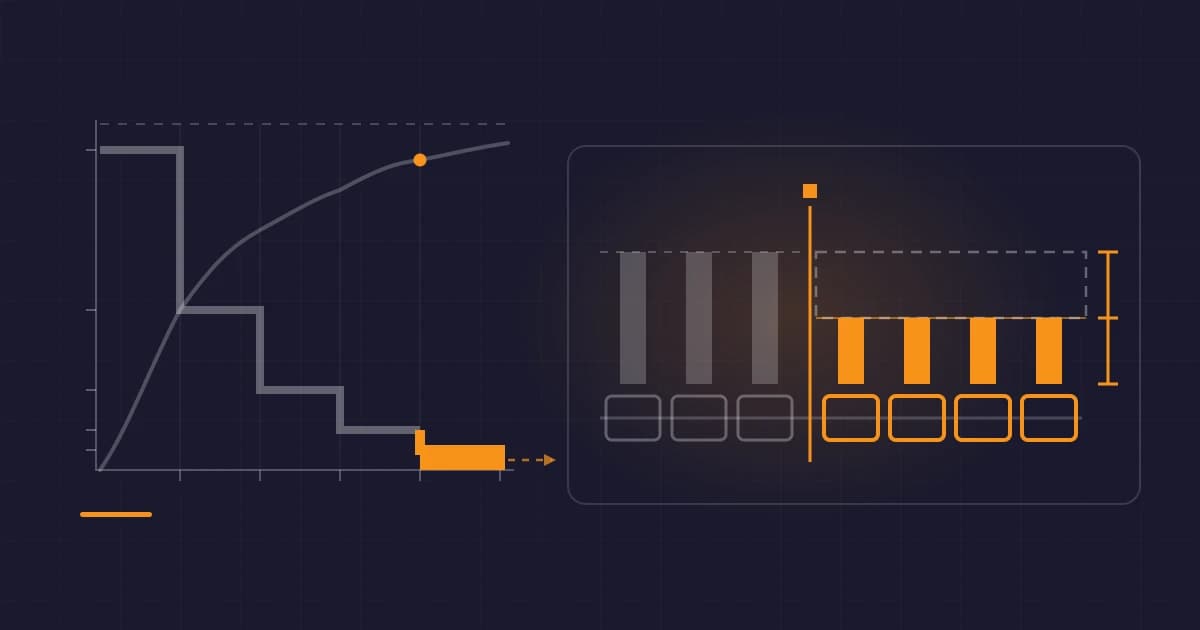
The rule is four lines of arithmetic. Every 210,000 blocks the subsidy halves, starting at 50. At roughly ten minutes a block that is about four years. The series converges, and the sum of it is where the 21 million figure comes from: it is not a target anyone chose and maintains, it is what this sequence adds up to.
What makes it interesting is not the schedule but the enforcement. A miner who publishes a block claiming 6.25 after height 840,000 has that block rejected by every node running the rules, and the work spent on it wasted. Nobody prevents the attempt. The attempt simply does not produce a block anyone else will build on.
Compare that with how the supply of a national currency changes: a committee meets, weighs conditions, and decides. Both are policy. One is enforced by institutions and can be revisited; the other is enforced by every participant independently checking arithmetic, and revisiting it would require convincing all of them at once.
What it does not change
Miner revenue is subsidy plus fees, and only the subsidy halved. Fees are set by demand for block space and are unaffected by the event itself.
It does not guarantee anything about price. A scheduled, universally known supply change is the textbook case of information that market participants have had years to price, and treating each halving as a fresh catalyst assumes nobody was paying attention to a number published in 2009.
And it does not fix miner economics. Halving cuts revenue immediately while costs stay put, which squeezes the least efficient operators, and every cycle some of them shut down. The difficulty adjustment then does its work.
Context
Miners came into this one with hashrate and difficulty at record levels, which means the cut lands on an industry that has just spent heavily on machines and power contracts. Three months ago the SEC approved spot exchange-traded products, and a good deal of the capital raised in this cycle was raised into that mood. Whether any of it survives a halved subsidy is a question about balance sheets, and it will be answered over weeks rather than today.
The most striking detail was on the day itself. The Runes protocol launched at this exact block, and demand for that block's space pushed its fees to roughly 37.6 bitcoin, about twelve times the subsidy that had just been cut in half. For one block, the fee market paid for security several times over.
Whether that persists past a launch is not knowable this morning, and one block is not a trend. What it does is put a number on a question the schedule guarantees will eventually matter. Every halving after this one makes the subsidy a smaller share of what pays miners. Nothing in the design says fees will grow to fill the gap. It says only that the gap arrives on time.